Consistent curb appeal, less landscape upkeep
Commercial Artificial Turf in St. George
Plan water-smart green space for HOAs, businesses, resorts, and high-use properties that need to present well every day.
- High-traffic planning
- HOA & hospitality uses
- Site-specific quote
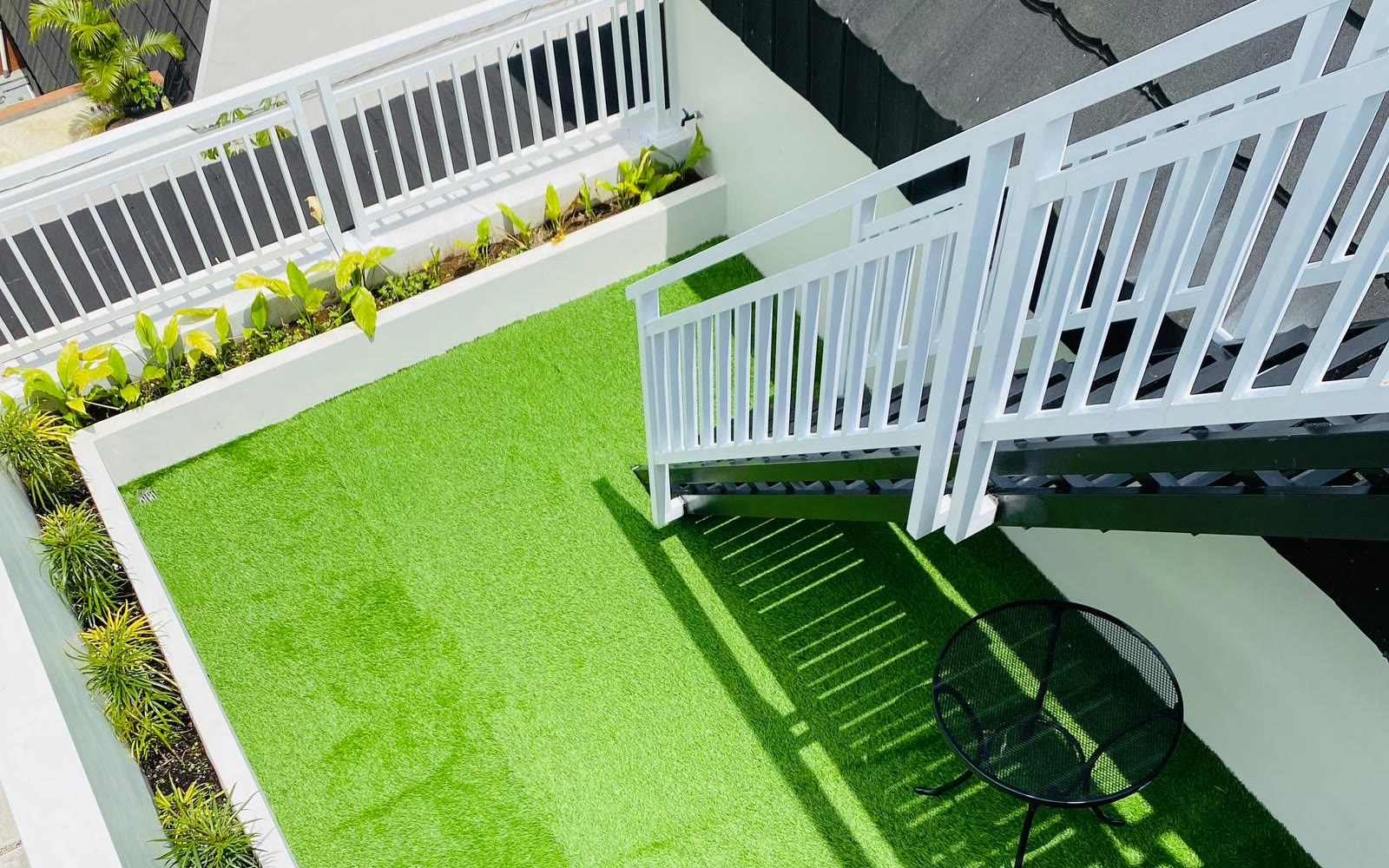
Where Commercial Turf Works
HOA common areas
Entrances, park strips, and community lawns that stay green without a constant water and mowing budget.
Resorts & hospitality
Pool decks, putting areas, lawns, and amenity spaces that see heavy use and need to present well.
Medians & municipality
Drought-conscious landscaping for medians, roundabouts, and parks.
Business & retail grounds
Curb appeal around shops, offices, and commercial property that reads 'well kept' with minimal upkeep.
Is Commercial Turf a Good Investment for St. George Properties?
For a property owner managing an operating budget, the math tends to be strong. Replacing irrigated grass with turf removes a major recurring line item — water, mowing, fertilization, and sprinkler maintenance — for a one-time install cost that spreads over many years. On a large property, the water savings alone can be substantial, especially with Southern Utah's hot, dry summers and a steady need to keep common areas green. A turf conversion turns a high-maintenance expense into a fixed, low-cost asset that keeps looking good with minimal upkeep.
HOA and Commercial Water Rebates
In Washington County, replacing irrigated grass with water-efficient landscaping — including turf — can align with the WCWCD water rebate program (up to $3 per square foot). Eligibility and terms can vary for commercial and municipal properties, so it's worth confirming the current rules and the pre-conversion site visit requirements with WCWCD and the property owner up front. When a site qualifies, the rebate meaningfully lowers the net install cost.
Commercial vs. Residential Considerations
Commercial projects tend to be larger, see more traffic, and carry higher expectations for appearance and longevity than a home lawn. That means commercial-grade turf, more thorough site prep and drainage, and often a larger scope of work. It's worth choosing an installer experienced with commercial-scale installations rather than treating it like an oversized lawn project. At commercial scale, a well-planned base and drainage system protects the investment and keeps the surface looking and draining right over years of use.
What Does a Commercial Turf Project Cost?
Commercial pricing is highly project-specific — driven by total square footage, the amount of site prep and grading, the turf grade, drainage requirements, and access for equipment. Because of the scale and the standards for appearance and durability, commercial projects usually get a commercial-grade product and a thorough base build. The most reliable way to budget is a site-specific quote from an installer experienced with commercial work. See our cost guide for what drives the price and how to compare proposals fairly.
Planning a Commercial Project
- Define the use — foot traffic, vehicles, or display-only space changes the product and build.
- Scope drainage & grading — larger areas need a real base and drainage plan.
- Check rebate/water rules — confirm whether the site qualifies for the WCWCD program and confirm the pre-conversion visit requirement.
- Compare installers — ask about commercial experience, product lines, and post-install support.
Frequently Asked Questions
How long does commercial turf last?
Commercial-grade turf, installed properly with a good base and drainage, typically lasts 15 to 20 years. It's engineered for higher traffic and appearance standards, so it holds up longer than a standard residential product under commercial use.
Is artificial turf safe in public and play areas?
Suitability depends on the exact use and product system. A decorative HOA lawn, dog area, playground, and pool-adjacent walkway have different drainage, impact, accessibility, heat, and traction requirements. Ask for the manufacturer's test data and warranty, and confirm any applicable code or ASTM requirements for public-facing or play areas before selecting the system.
Does commercial turf help with water conservation requirements?
Yes. Replacing irrigated grass with turf removes a large water demand and aligns with drought-conscious landscaping goals. In Washington County it can also qualify for the WCWCD water rebate program, subject to eligibility and the pre-conversion visit. See our rebate guide.
Can turf handle vehicles or heavy equipment?
Turf can support vehicle traffic if the base is designed to carry that weight, but it requires a heavier base build and specific turf. For display-only or occasional parking, it works; for regular vehicle use, a structural base is needed. We'll design the base for how the area will actually be used.
Planning a commercial turf project? We help HOAs, businesses, resorts, and property owners scope water-smart turf that looks good and saves on upkeep. Call (435) 261-2875 or use the short form below.