Cleaner yards for dogs and their people
Pet-Friendly Artificial Turf in St. George
Create a durable, drainable place for dogs to run without the mud, worn paths, and constant lawn repair.
- Fast-draining base
- Cleanup-friendly system
- Free site-specific quote
Why Pet Owners Choose Turf
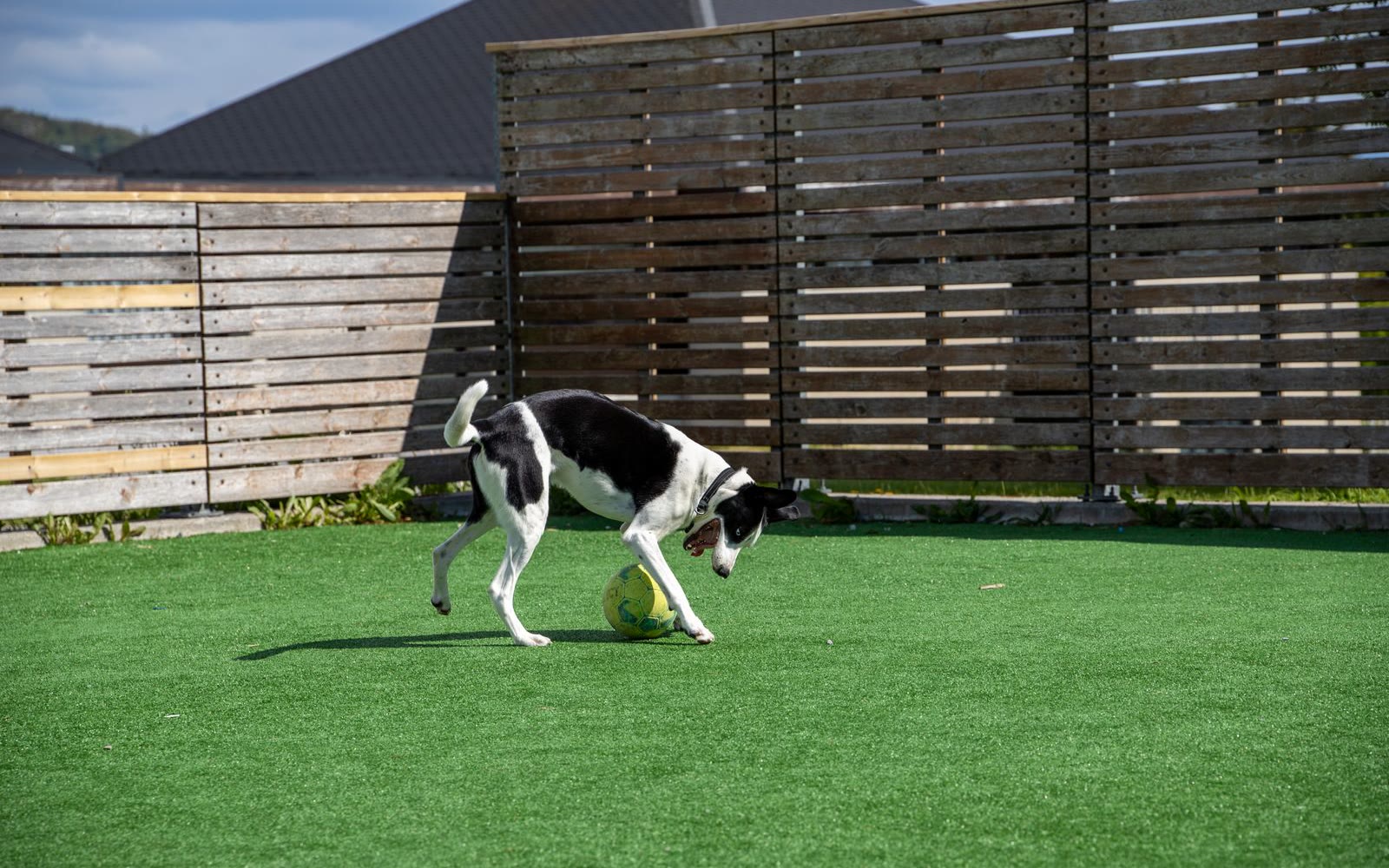
Dogs are hard on real lawns. High-traffic paths wear to dirt, urine burns yellow patches, and rain turns a yard into mud. Artificial turf built for pets solves the constant repair cycle with a surface that drains, cleans, and holds up to claws and zoomies. In a hot, dry climate like St. George, it also removes the need to water a grass yard that a dog is actively destroying anyway — so a pet turf area saves water and ends the lawn-repair loop at the same time.
There's a second reason it fits Southern Utah specifically: real grass here needs steady irrigation to survive the summer, and a dog using the same patch daily will kill it faster than the heat will. Pet turf decouples the two problems — the dog gets a usable surface year-round, and the water bill stops paying for greenery the dog was going to destroy regardless.
What Makes Turf Pet-Friendly
Drainage
A perforated backing and drainage base let urine and rinsing water pass through instead of pooling.
Pet-safe infill
Infill is chosen with paws and cleanup in mind. Routine hosing and occasional deodorizing keep it fresh. Specialized pet infills are also available.
Durable face
Denser pile stands up to running, digging habits (within reason), and repeated use.
The order above is also the order of importance. Most complaints about pet turf — smell, patchiness, slow drainage — trace back to the base, not the turf. A dense, well-draining build with adequate compaction handles a dog far better than a premium turf laid over an inadequate base.
Is Artificial Turf Safe for Dogs?
Yes — when it's the right product, installed correctly. The two things that matter are the infill and the drainage. Pet-safe infill is non-toxic, and the drainage system prevents urine from sitting on the surface. With routine upkeep — removing solid waste promptly, hosing the area down, and using an enzyme deodorizer occasionally — pet turf stays clean and odor-free. A proper base is what keeps that drainage working, which is one reason site prep matters more than the turf itself. We help you choose a pet-grade turf and infill that fits your dog's size and your cleanup routine.
Does Pet Turf Smell? Does It Drain Properly?
Turf only smells if waste sits on it. On a properly installed pet turf, urine drains through the backing into the base, and routine hosing flushes the surface. Solid waste should be picked up promptly — same as a real lawn. An enzyme cleaner that's safe for pets breaks down the odor naturally. The single most important factor is that the turf and base drain well; without drainage, any turf can trap moisture and odors. That's why pet areas get a dedicated drainage base rather than being treated like a simple lawn.
One practical note for a desert climate: the fastest way to make a pet area smell is to let it dry out with waste on it before rinsing. In hot weather, rinse more often, not less.
Cleaning and Maintenance
Pet turf is low-effort but not zero-effort. Remove solid waste promptly, hose the area, and reapply an enzyme deodorizer occasionally. Every few weeks, brushing keeps the fibers upright and redistributes infill. It's far less work than repairing a real lawn a dog has torn up, and it does not require the weekly water and mowing a grass yard needs.
A five-minute routine is usually enough: pick up solids daily, hose the area a couple of times a week (daily in the hottest months), and deodorize every couple of weeks. That's the entire maintenance picture for most households.
Is Pet Turf Too Hot for Dogs in St. George?
This is the concern we hear most from local dog owners, and it's a fair one — St. George summers are among the hottest in Utah, and artificial turf genuinely does get hotter than real grass in direct sun. It's worth understanding exactly why, because it's manageable.
Why turf gets hot: real grass cools itself by moving water through the plant and evaporating it. Synthetic turf can't do that, so in full sun its surface can reach temperatures well above ambient air — hot enough that paws are uncomfortable for a period in the middle of the day. It is also worth knowing that turf is not uniformly hot: the temperature depends heavily on the infill, the turf's color and construction, and above all on whether it's in shade.
What actually helps:
Shade
The single biggest factor. Turf in shade stays dramatically cooler than turf in full sun — a shaded patch is genuinely usable in the middle of a summer day.
Infill choice
Infill options differ in how much heat they retain. Some silica-based infills run hotter under sun; alternatives are available that reduce surface temperature. This is a product decision worth making up front.
Light color
Lighter-toned turf absorbs less solar heat than dark turf. Color choice affects both appearance and surface temperature.
Rinsing
A quick rinse cools the surface, but be realistic: in full sun it heats back up within a short time. Rinsing is relief, not a solution.
Practical guidance: provide dependable shade over the area your dog actually uses, keep water available, and time outdoor activity to the cooler parts of the day. Before letting a dog out in peak summer sun, place the back of your hand on the turf for a few seconds — it's the same test that protects human feet, and it's the honest way to judge whether the surface is comfortable. Hot turf isn't a reason to avoid the product; it's a reason to plan shade and infill deliberately rather than leaving them to chance.
Pet Turf in a Desert Setting: What's Different Here
Two local factors shape how a pet turf project should be built in the St. George area. First, drainage design matters differently than in wetter climates — this is not a place with frequent rain, but when storm water does arrive it can come quickly, and what matters is that the base has somewhere for water to go rather than sitting under the turf. Second, the sun exposure is severe, which makes shade and infill choices more consequential here than they would be somewhere milder. A pet area built for St. George should be planned around those two facts.
Pet-Friendly or Family-Use Turf?
Because pet-grade turf is durable and easy to clean, it also suits high-traffic family areas — the same yard that handles the dog usually handles kids, grills, and furniture all season. If you're installing turf for both a dog and a family, a pet-grade face is a sensible choice; it does double duty without extra work.
What a Pet Turf Project Costs
Pet turf generally lands on the higher end of the residential range, because it needs a purpose-built drainage base, pet-safe infill, and a more durable face — the three things that make it work. Expected cost scales mainly with area and how much site work your yard requires; access, slope, and existing surface are the usual variables. For the full breakdown of what drives pricing and how to read a quote, see our artificial turf cost guide.
Frequently Asked Questions
Which dog breeds is pet turf best for?
Pet turf works for nearly all breeds. The key is matching the pile density and drainage to the dog's size and energy. Large or high-energy dogs benefit from denser, more durable turf; smaller, low-activity dogs are comfortable on a standard pet grade. We'll recommend based on your dog and your yard.
Does artificial grass get too hot for dogs in summer?
In full sun it can, during the hottest part of the day — that's honest, and it's true of any synthetic surface in desert sun. Three things reduce it substantially: giving your dog shaded turf to use, choosing an infill that retains less heat, and choosing a lighter turf color. Test the surface with the back of your hand before letting a dog out in peak sun. With shade and the right infill, most owners find the surface usable through the summer.
Can I install pet turf over a dirt or gravel yard?
Usually, but only after proper site prep. A clean, level, well-drained base is essential for pet turf so water doesn't pool and odors don't build up. The existing surface is removed or graded as needed, then the drainage base is built before the turf goes down.
How often does pet turf need cleaning?
Pick up solid waste as part of your normal routine, hose the area down regularly (more often in heavy use), and use an enzyme deodorizer occasionally. Brushing every few weeks keeps the fibers upright and redistributes infill. It's a fraction of the work of maintaining a real lawn.
Will pet turf smell like dog urine?
Not if it's built and maintained properly. Urine drains through the backing into the base rather than sitting on the surface, and routine rinsing flushes what remains. Odor problems almost always trace to poor drainage or waste left sitting, not to the turf material itself. Prompt pickup and regular rinsing prevent both.
Does pet turf work for indoor or balcony dogs?
Pet turf is a great solution for balconies, dog runs, and covered areas where grass can't grow. The same drainage and pet-safe infill principles apply, and a professional install ensures it drains correctly in a small or enclosed space.
Building a dog run or a pet-friendly backyard? We'll help you pick pet-grade turf and a drainage base that works with your dog and your St. George yard. Call (435) 261-2875 or use the short form below.